Paul Evans
evans2pm@gmail.com
The Historian and the Formation of National Identity:
The Narrative and the Classroom as Lieux de Mémoire
In his work Nations and Nationalism (1983), Ernest Gellner links the emergence of nations with the rise of the industrial era. He argues that the rapid economic change of industrialization and the need for a division of labor required the implementation of nationalism to mold culturally homogenous and educated populations. By his theory, the final step of this process is the creation of nations. What is implicit in this process is the need for new national identities to galvanize nations. In his famous lecture at the Sorbonne in March 1882, Ernest Renan explained, “Nations are…something new in history. What characterizes these various nations is the fusion of the populations which compose them” (Renan, 1882). The fusion of the French population for both industrial and nationalist goals required an articulation of French national identity. After the year 1789, any such conception of a common French national identity had to somehow confront the consequences of the French Revolution. As Krishnan Kumar explains, “everything in the past flowed towards it; everything in the future took its point of departure from it” (Kumar, 10). In his essay The Burden of History (1966) Hayden White explains that beginning with the nineteenth century, the disciplines of art, science, philosophy and history saw that their common task was to interpret the memory of French Revolution (125). This remained the case throughout the nineteenth century in France during which the historians Jules Michelet (1798-1874) and Ernest Lavisse (1842-1922) attempted to define the French national character or genius through their writings. In the face of perceived threats to French republican idealism and fortitude, both historians assumed the responsibility of rehabilitating the memory of The Revolution as the defining event of French National identity. However, as the historian Pierre Nora indicates in Les Leiux de Mémoire, what these historians engender are not authentic memories but rather “artificial creations: ‘places of memory,’ not memories themselves” (Nora qtd in Englund, 305). Just as Nora’s “places of memory” are artificial creations, so too, are the identities constructed at them. For Jules Michelet during the first half of the nineteenth century, the narrative was the lieu de mémoire and the site of identity formation. In the case of Ernest Lavisse nearly fifty years later, the French classroom became the lieu de mémoire and the venue for the formation of French national identity. Thus, the recent historiography of France demonstrates the agency of historians in the formation of national identity.
Nora’s understanding of the relationship between collective memory and national identity is based on a critical distinction between history and memory—lieux and milieux de mémoire. He believes that history becomes necessary when people become aware of the “pastness of the past” and the need for written documents to recall it (Tai, 915). He argues that France’s need for memory has in fact been a need for history—that is, “a recreation of applied critical reason, which fixes the past, but only at the cost of discontinuity and distance” (Nora qtd. in Englund 305). The role of historians is therefore to “respond to the emotional and psychological needs of their citizens” (Englund, 305). When the historian responds in this way his role becomes a political one, his interpretation of past national memory (milieux de mémoire) becomes history (lieux de mémoire), and his narrative becomes an expression of nationalism. This is why Eric Hobsbawm argues in his essay “Ethnicity and Nationalism in Europe Today” (1996) that “historians are to nationalism what poppy-growers in Pakistan are to heroin addicts: {they} supply the essential raw material for the market (Hobsbawm, 255). Jules Michelet and Ernest Lavisse’s writings must therefore be interpreted as responses to the demand for historically rooted nationalist narratives.
Jules Michelet’s works Peuple (1846) and Histoire de la Révolution Française (1847) are expressions of the revolutionary nationalism of 1848 (Jenkins, 55). Michelet was driven by the reemergence of class cleavages and social inequality in France under the rule of Louis Philippe (1830-1848) (Haac, 500). For Michelet, this was evidence that the spirit of the revolution had not endured. He writes in Histoire de la Révolution Française,
Unanimous! There was a complete and unreserved agreement, a quite simple situation with the nation on one side and privilege on the other. And in the nation, then, there was no distinction possible between the people and the bourgeoisie…..Ah! who would not be touched by the remembrance of that unique moment, which was our point of departure? It was short-lived, but it remains for us the ideal towards which we shall always tend.
(Histoire de la Révolution Française, I, 88-89)
In an effort to revive the character and spirit of The Revolution, Michelet was concerned with establishing continuity between the past and present. Anthony Smith (2004) identifies this process as a convention of nationalist ideologies where the historian resurrects memories of “golden ages” aiming at national regeneration, establishment of continuity, dignity, and destiny (Smith, 20). As demonstrated by his writings, Michelet felt a strong sense of duty as a historian to locate the character of The Revolution in the present and to point out the “chain of destiny and to prepare the people for a free and glorious future” (Haac, 501).
Ernest Lavisse wrote 27 volumes of Histoire de France between 1900 and 1912. Lavisse was known during his time as “the evangelist of the Republic.” He also acquired the nickname “the nation’s teacher” as his short reader Le Petit Lavisse became the primary textbook used in teaching history in French secondary schools around the turn of the century (Kumar, 10). Krishnan Kumar explains that following the Dreyfus Affair and humiliating defeat in the Franco-Prussian War of 1871, Lavisse “aimed at a comprehensive rehabilitation of the French republican idea” (Kumar 10). In a speech delivered in August of 1905 at the village of Nouvion-en-Thierache, Ernest Lavisse addressed a classroom full of students from his native region. He spoke,
My children, our fatherland is not merely a territory; it is a human structure, begun centuries ago, which we are continuing, which you will continue.
(qtd. In Singer, 414)
By personifying French national identity as a “human structure” and locating it in the past, the present, and the future, Lavisse establishes the continuity of The Revolutionary character and a sense of common destiny shared between generations. Therefore, Lavisse’s task is the same as Michelet’s was fifty years earlier.
However, the point of departure between Michelet and Lavisse begins with how each historian presents his narrative with respect to historical verisimilitude. Michelet was more concerned with composing a compelling narrative than with scientifically piecing together the past. He believed the French national identity should not be treated objectively nor did he accept that as an historian he was obligated to remain neutral in his representation of it. Rather, Michelet injected notions of morality, justice, and judgment into his narrative (Haac, 498). Ceri Crossley (1993) explains, “Michelet abandoned any sense of the historian as a straightforward chronicler of events.” More than a mere “intellectual reconstruction,” Michelet’s narrative was “an impassioned act of recreation” (Crossley, 186). It elicited an emotional response, one that invited the reader to collaborate with the author in constructing French national identity.
By contrast, Ernest Lavisse’s narrative is composed from archival research, documentary evidence and it is generally regarded as a more scientific approach to redefining French national identity. It is not necessarily a more accurate representation of history, but its form implies greater consideration for verisimilitude. Whereas Michelet’s romantic narrative exposes the tension between classes that existed before the Revolution of 1848, Lavisse’s intent was to construct a “single and unified national story that could be employed to encourage a cohesive and patriotic people” (Wright, 206). His method effectively limits the agency of his audience in the recreation of national identity. Suzanne Citron (1989) argues that Lavisse’s narrative never “invites the qualities of lucidity, critical reflection, or tolerance,” nor does it “encourage initiative or participation” (Citron qtd. in Jenkins, 86). Thus, the narratives of Jules Michelet and Ernest Lavisse differ not only in their consideration of verisimilitude but also in their concern for the participation of their audience in identity making.
For Pierre Nora, more important than how or whether the historian engages his audience is where the historian engages his audience. The venue of this interaction has implications for relationship between the historian, his audience, and the formation of national identity. Nora defines a lieu de mémoire as any site “where cultural memory crystallizes and secretes itself” (NoraL 1989, 7). Lieux are symbolic objects of memory—they can be archives, libraries, dictionaries and museums, as well as commemorations, performances, and institutions (Nora: 1989, 11). Lieux are for historians and their audiences the sites where memory becomes history. For French historians including Michelet and Lavisse, they are also where the mythic character of The Revolution can be translated into national identity. To reiterate, for Michelet, these processes took place within the body of his narrative. For Lavisse, known during his time as the “nation’s teacher” (Kumar, 10), history and identity making took place exclusively in the classroom.
Ceri Crossley (1993) credits French historian Augustin Thierry (1795-1856) with redefining the function of the historian as narrator (Crossley, 51). Moving away from the past convention of preserving the reader’s “detachment and freedom,’ Thierry felt that the historian was obligated to envelop his reader “in the seamless fabric of the past” (Thierry qtd. in Crossley, 51). Jules Michelet inherited this redefinition of the role of historian. His narrative provided a venue for participation in that it offered to the reader the possibility of “acceding in turn, at an additional remove, to the revelatory moment (Crossley, 246).” The moment that Crossley is referring to is the moment when the reader becomes aware of his agency in the construction of French national identity. To this end, Michelet intentionally avoided context and temporality in his narrative. Nor did he develop thoughts from one sentence to the next. In a description of this tactic Roland Champagne (1984) explains that reading Michelet’s narrative “demanded interrupting reflections upon the ties connecting the sentences to one another” (Champagne, 47). In this, Champagne argues, Michelet’s reader is “forced to link the interruptions of reading with the text and his or her own self.” This challenge demands that reading Michelet’s narrative be “an activity and a creativity” (Champagne, 48). In Histoire de la Révolution Française (1847-1853), Michelet writes,
Time has perished, space has perished, those two material conditions to which life is subject…A strange vita nuova, eminently spiritual, is beginning for France and making her whole Revolution a sort of dream, at one time delightful, at another terrible….It knew neither time nor space.
(Histoire de la Révolution Française, II, 155-6)
Michelet’s narrative is the site where the historian and his reader collaborate in the process of identity making. It should therefore be considered a lieu de mémoire.
As the chair of the History department at College de France and as an instructor of philosophy and history at École Normale, Michelet’s primary audience was his students (Crossley, 184). He was aware of his position of influence and unafraid to politicize his classroom. His method was to let his students read their books while he “endowed them with the needed enthusiasm and the moral interpretation of history” (Haac 500). Michelet’s tactic apparently worked, as it was the young intellectuals of France who helped to prepare the Revolution of 1848 and later worked to perpetuate it (Haac, 500). After being dismissed from his teaching positions by Louis Napoleon in 1851 for his controversial lectures, Michelet sought out new ways to influence the largest audience possible. He viewed his dismissal as an opportunity to move beyond the narrow confines of his role as teacher and engage a broader audience, “exalting democracy, the harmony of moral life, and education for the people which was to be guided toward a realization of its capacities” (Haac, 500). Thus, Michelet’s role was not merely to instruct from the top down, but more importantly to inspire from the bottom up.
Michelet’s emphasis on recreating French national identity in his narrative stands in direct contrast to Ernest Lavisse’s more scientific and structured approach to accomplishing the same task in the classroom. The difference in style and approach is reflective of a larger change in French historiography that took place towards the second half of the nineteenth century. In The Burden of History (1966) Hayden White explains that historians from this period saw their work as “a combination of romantic art on the one hand and of positivistic science on the other” (White, 126). The role of the historian thus changed in that his task was now in “fusing the new method of social and psychological analysis with his traditional storytelling function” (White, 126). With this, history became narrower in its scope and methods and less interdisciplinary as compared to the first part of the nineteenth century. Concomitantly, its telling became more about instruction and less about inspiration and participation. The aims of both the academic and political world were in accord as history became institutionalized (Wright, 205 and 206). The state demanded a single and unified national historical narrative that could be used to promote a cohesive and patriotic people. Inasmuch as the historian was a tool for nation-building, his task in forging a national identity was also a response to
industrialization’s need for a more educated workforce (Wright, 205). In Les Lieux de Mémoire Pierre Nora describes that during this period the historian was operating “under the state’s aegis,” drafted into national service as “half priest, half soldier,” responsible for organizing collective memory and recreating French national identity (Nora qtd. in Englund, 305).
To restate Nora’s theory, these processes take place at lieux de mémoire, or memory sites. Thus, the lieu de mémoire for Lavisse was the classroom where commemoration became the mechanism by which French national identity was formed. Lavisse’s histories were adapted into textbooks and used throughout France in newly formed state schools. His scientific re-telling of French national past was crucial to the inculcation of republican principles and the forging of national identity (Jenkins, 83). Unlike Michelet whose narrative encouraged interaction and creativity on the part of his reader, Lavisse’s histories encouraged neither collaboration nor participation. Rather than inspiring nationalism, Lavisse instructed it. In A Propos de Nos Ecoles (1895) he writes, “if we flood children’s heads with images of a powerful France, then they will carry these ideas with them forever” (Lavisse, 11). Lavisse addresses his audience (the schoolchildren) at the beginning of Histoire cours Moyen (1912) with a poem,
Child,
You see on the cover of this book the flowers and the fruits of France
In this book, you will learn the history of France.
You must love France because nature has made her beautiful,
And because her history has made her great.
Again, Lavisse’s tone is didactic and authoritative, instructive rather than inclusive. Therefore, in presenting a more scientific organization of history to a captive and impressionable audience, Lavisse’s aim was to inculcate a sense of French national identity.
The democratic movement started by Michelet at the first half of the nineteenth century had been appropriated by the state and it assumed the “guise of a aggressive, overtly political ideology” (Jenkins, 86). During Lavisse’s tenure education in France had been made free, secular, but the tradeoff was that it became obligatory and highly political—an effective tool in “assimilating the children of the diverse traditions of France and building a culturally cohesive state” (Wright, 207). Therefore, the role of historian as custodian of nationalism and French national identity moved from left to right during the nineteenth century. With it, the construction of national identity became less a function of the people and more a function of the state.
Modernist theorists of nationalism including Eric Hobsbawm, Ernest Gellner, and John Breuilly contend that both nations and nationalism are uniquely modern phenomena created by industrialization and occurring since the French Revolution (Kumar, 14). Therefore, the role of the historian as author of nationalist narratives and of national identity is also a modern one. The recent historiography of France most effectively illustrates the how modern historians have attempted to forge national identities out of glorified and exaggerated accounts of the past. However, as the comparison between Jules Michelet and Ernest Lavisse demonstrates, the historian’s role has not remained constant since its inception in the wake of the French Revolution. The most telling indicator of how the historian’s role evolved during the nineteenth century has been the change in the chosen lieux de mémoire—the place where the memory becomes history and national identity is recreated. Whereas Jules Michelet’s narrative encouraged the participation of his reader in the construction of national identity from the bottom-up, Lavisse’s didacticism informs his preference for inculcating French national identity from the top-down. Both historians’ approach to forging national identity was shaped by historical context and their relationship to the state. Michelet’s highly romanticized and lyric narrative mobilized people against the state and exposed the tension between classes on the eve of the Revolution of 1848. By contrast, Lavisse’s more objective and scientific approach to forging a unified and cohesive national identity informs his subjectivity to and cooperation with the state. Though from different perspectives and to differing degrees, the work of both Jules Michelet and Ernest Lavisse was influential in the development of the Annales school which includes Pierre Nora in its third generation of historians (Forster, 60). Annales historians have deemphasized the importance of French history since 1789 and instead considered a longer period of history (la longue durée) and a wider range of disciplines in their analyses of French history and identity (Forster, 59). In an article published in Annales journal in 1903 explaining the Annales method and cause, Francois Simiand writes,
We publish this especially for younger historians in order to allow
them to take stock of the road we have traveled in a half-century, and to gain a better understanding of the dialogue between History and the Social Sciences, which remains the goal and raison d’etre of our review.
(Simiand qtd. in Forster, 61)
This represents a break with the political use of history employed 19th century French historians including Michelet and Lavisse. Thus we have arrived at a clear evolution of the role of historian beginning with Michelet who sought to inspire national identity, Lavisse who instructed national identity, and Nora (representing the Annales school) who more purely sought to understand it.
References
Champagne, Roland. Literary History in the wake of Roland Barthes:
Redefining the Myths of Reading. Birmingham, Alabama. Summa Publications, Inc. 1984.
Crossley, Ceri. French Historians and Romanticism: Thierry, Guizot, the
Saint-Simonians, Quinet, Michelet. London. Routledge Publishers. 1993.
Englund, Steven. “The Ghost of Nation Past.” The Journal of Modern History, Vol 64,
No. 2 (June., 1992), pp. 299-320.
Forster, Robert. “Achievements of the Annales School.” The Journal of Economic
History, Vol. 38, No. 1, The Tasks of Economic History (Mar., 1978), pp. 58-76.
Gellner, Ernest. Nations and Nationalism. New York. Cornell University Press. 1983.
Haac, Oscar. “Michelet’s Purpose.” Proceedings of the American Philosphical Society,
Vol. 94, No.5 (Oct. 19, 1950). pp 494-501.
Hobsbawm, Eric. “Ethnicity and Nationalism in Europe Today.” from Mapping the
Nation. Gopal Balakrishnan ed. New York. Verso Publications. 1996. pp. 255-
266.
Jenkins, Brian. Class and Nation Since 1789. London ; New York : Routledge, 1990.
Kumar, Krishnan. “Nationalism and the Historians,” in Delanty, Gerard and Kumar, Krishnan, The Sage Handbook of Nations of Nations and Nationalism.
London. Sage Publication, Ltd. Pp. 7-20.
Lavisse, Ernest. Histoire de France, Cours Moyen. Armand Colin ed. Paris. Librarie
Armand Colin. 1912.
Lavisse, Ernest. A Propos de Nos écoles. Armand Colin ed. Paris. Librarie Armand
Colin. 1895.
Michelet, Jules. Le Peuple. ed. Paulin, 1846. À M. Edgar Quinet. p. XLIII
Michelet, Jules. Histoire de la Révolution française.éd. Chamerot, 1850, t. 1er, p. XVI
Nora, Pierre. Between Memory and History: Les Lieux de Mémoire. Representations,
No. 26, Special Issue: Memory and Counter-Memory, (Spring, 1989),
pp. 7-24
Renan, Ernest. Lecture at Sorbonne; 11 March 1882
in Discours et Conferences. Paris,
Calman-Levy, 1887, pp. 277-310.
Singer, Barnett. “From Patriots to Pacifists: The French Primary School Teachers, 1880-
1940. Journal of Contemporary History, Vol. 12, No. 3 (Jul., 1977), pp. 413-434
Smith, Anthony. The Antiquity of Nations. London. Polity, 2004.
Tai, Hue-Tam Ho. “Remembered Realms: Pierre Nora and French National Memory. “
The American Historical Review, Vol. 106, No. 3 (Jun., 2001), pp. 906-
922.
White, Hayden. “The Burden of History.” History and Theory, Vol. 5, No. 2 (1966), pp.
111-134.
Wright, Sue. Community and Communication: The Role of Language in Nation-State
Building and European Integration. New York. Multilingual Matters, 2000.
Thursday, December 9, 2010

Monday, December 6, 2010
"This is my body, which is given for you."

Coordinates:
N 37 34
W 77 30
Listening: "Politik," by Coldplay from "A Rush of Blood to the Head" (2002)
Luke 22: 14-30
This is my body, which is given for you.
When I was a child, my mother would often read Shel Silverstein’s story “The Giving Tree” (Harper and Row, 1964) to me as I fell asleep. For those of you unfamiliar with the story, this is a tale about a relationship between a young boy and a tree. The tree, personified, gradually gives away her leaves, apples, and branches to the young boy who uses these things to make himself happy. As the boy grows into a young man, he requires more of the tree, and ultimately cuts her down so that he can build a boat in which to sail away. Many years later, the tree-- now merely a stump-- and the boy --now a tired old man-- reconnect as the stump serves as a suitable place for her beloved to sit and rest.
Recently in my daily life I have found myself requiring more of God—asking God more frequently for strength when I am tested, for courage when I am afraid, and for patience and calm when I am faced with anxiety. The more I have come to rely on God’s mercy, the more I have been questioning of my worthiness to receive it. Like Jesus’ disciples at the Last Supper, I’ve been struggling to discern whether the balance of my virtue versus my iniquity has earned me a place at the table.
Silverstein’s story about unconditional love and self-sacrifice helps me to see the Eucharist as a reminder of God’s grace and my worthiness to receive it. Though I may have wandered far from my Provider, this passage from the Gospel of Luke helps me to understand the season of Advent as an invitation back to the table and an opportunity for new life in God through the birth of His son Jesus Christ.
Friday, January 23, 2009
Inaugurated

Listening: Ave Maria, (Prelude in C Major by J.S. Bach with sung melody as arranged by Charles Gounud) performed by Bobby McFerrin and his audience
In one of his first executive orders, President Barack Obama ordered a 120 day freeze on all military trials of terrorist suspects being held in Guantanamo Bay, Cuba. Obama has pledged that the military commission system set up there under the Bush administration will be defunct by 2010. Reactions to this decision have been split in America. Many hailed it as a first and important step towards building a new foreign policy. Others criticized it as irresponsible, dangerous, and compromising of national security.
The fault lines surrounding this issue are partisan. Republicans tend to be critical of the decision to close Guantanamo while Democrats are largely supportive of it. At the risk of furthering and potentially exploiting a false dichotomy, the respective positions inform the broader world views of the two camps. For the past eight years the Republican security strategy has been influenced by the deeply held neoconservative conviction that we live in an utterly anarchic world where the rule of law is unreliable and where civil liberties must sometimes be sacrificed to fight the war on terror. Democrats tend to place more faith in the rule of law and more of an emphasis on the protection of civil liberties at all cost. Both perspectives rely on dangerous assumptions.
In his article Smart Power; In Search of the Balance between Hard and Soft Power (2006), Joseph Nye continues his previous efforts to classify the utility of power. (See Soft Power, 1990, by Nye). Prior to writing this article, Nye had made a critical distinction between hard power and soft power. He defines hard power as the use of military means and coercion to achieve foreign policy objectives. Soft power is its opposite, whereby foreign policy goals are met by means of attraction rather than coercion. When writing this article in 1990, Nye was careful to explain that these are analytic terms and not political positions. However, I do believe that today he would agree with the following generalization: that the Republican approach to foreign policy over the past eight years has been characteristic of hard power and that the Democratic opposition has been more preferential of soft power.
In the context of our current conflicts in the Middle East and the ongoing War on Terror, (which, by the way needs to be renamed immediately to something less invective and provocative) both approaches must be employed. Nye argues, "we need hard power to battle the extremists, we need the soft power of attraction to win the hearts and minds of the majority of Muslims (103)." To this end, Nye proposes the term smart power--a new attitude about foreign policy which stems from the belief that "soft power is not necessarily better than hard power and that the two should be complementary parts of an effective strategy" (105). I agree with this, and I also believe that going forward, President Obama's emphasis on restraint, diplomacy, and building relationships must be coupled with a willingness to employ military force when necessary.
The most important thing--and I believe that Mr. Obama's decision to close Guantanamo Bay has made this abundantly clear--is that we set and implement policies that are consistent with our American values.
Employing smart power necessarily requires change in American foreign policy. If we are serious about spreading democracy and rebuilding our reputation in the world, our actions must reflect our values. With Iraq, we have learned the limits of coercive democratization. Following 9/11 2001 and with Abu Ghraib in 2003, we have been forced to deal not only with our roles as victims of atrocity, but also with our capacity to serve as agents of atrocity when our judgement is impaired by notions of moral superiority and righteousness. With Israel, we have been confronted with the power of wealthy lobbyists to compromise the legitimacy of American foreign policy by bending it in a direction that does not serve our interests. With Guantanamo, we have seen the hypocrisy of a legal system that keeps suspected terrorists awaiting trial indefinitely while subjecting them to torture. The total effect of these actions is a foreign policy characterized by hard power alone--one that has ironically compromised our power, freedom, and security relative to the rest of the world.
I agree with those who see closing the military prisons at Guantanamo Bay not only as a step away from the policies of the Bush administration, but as a step towards restoring American credibility, reestablishing American moral authority, and towards winning the hearts and minds of those nations who might partner with us in the poorly named War on Terror.
This does not mean a policy of appeasement. Military power and the threat of military action must remain a central part of American foreign policy. However, as Nye points out, there is tremendous opportunity to strengthen American soft power. Diplomacy, broadcasting, exchange programs, development assistance, disaster relief, and military-to-military contacts already all exist within our government. Implementing an American foreign policy characterized by smart power requires that Mr. Obama integrate these mechanisms into an overarching national security strategy. The clock is ticking.......
work cited: Nye, Joseph. Smart Power; In Search of the Balance between Hard and Soft Power. Democracy: A Journal of Ideas, Issue 2, 2006. pp. 102-107.
"Coercion, after all, merely captures a man. Freedom captivates him."
Secretary of Defense Robert S. McNamara
Kennedy and Johnson Cabinets 1961-1968
Sunday, January 11, 2009
New Years' Resolution

Location: Florence, Italy
Listening: Black Sheep, by Martin Sexton
Back in Florence. Returning to Richmond after my second extended absence of 2008 felt like showing up late to a party that had never really ended. Things immediately fell back into place.
Every writer has a tumultuous relationship with his hometown and mine is no different. For me, this is a relationship characterized by an almost reflexive veneration of the continuities of the place--running down Monument Avenue where Jackson, Stuart, Lee stand still to remind passers by of Richmond's confederate past, attending evensong at St. Stephen's Church at the top of Grove Avenue, having drinks with old friends at Philip's Continental Lounge, playing music at old haunts, and of course the experience of Christmas and all of its traditions with my family.

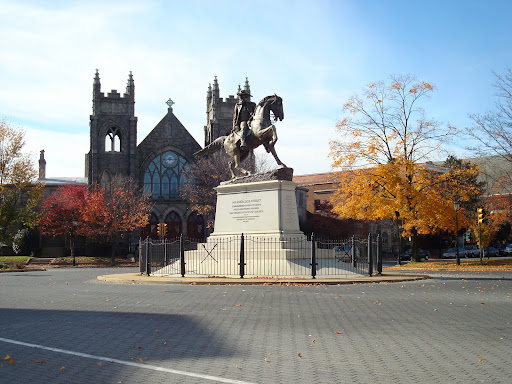
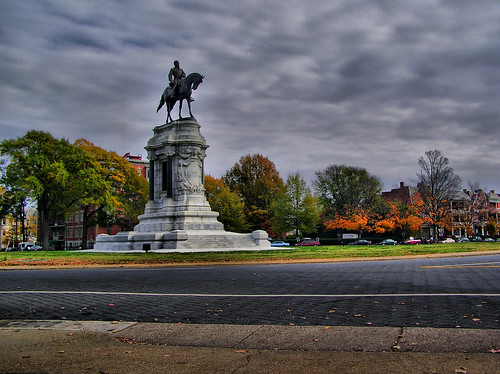
In all of the writings in this blog I've been unapologetically candid and emotionally blunt. This will not change in 2009. That being said, I once again take license to be sentimental in my reflections. Christmas break this year was for me a powerful reminder of how blessed and fortunate I am. In Richmond I leave a life characterized by an overwhelming sense of belonging and community, full of friends and family that I've loved all of my life. Because it is home, Richmond to me is the most comfortable and natural place in the world. The past there welcomed me and over break I welcomed it.
But back to that idea about a writer having a tumultuous relationship with his home. Much of of what William Faulkner wrote was inspired by the need to deal with home--his obligation as an author to represent the social, political, economic, and moral conditions present in the Post-Bellum South with respect to verisimilitude and towards the people and places about whom and where he was writing. Faulkner's fiction (his invented truths) are far more true than any journalistic or observational account of his subject could ever be. As I Lay Dying (1930) and The Unvanquished (1938) are set in the fictitious "Yoknapatawhpha" County, a device Faulkner employed in many of his novels that allowed him to engage his subject (Post-Bellum South) more critically while still remaining respectful to his native region. Through his fiction, Faulkner was able to represent The South as it actually was, and in so doing hint at what led to its fall and what might bring about its resurrection.
Inspired by Faulkner's method and by my 28 days back home in Richmond, Va, I now reveal to you my New Years' resolution for 2009--to begin writing a novel inspired by my experience growing up in Richmond. There are so many people and places that are fodder for fantastic fiction--many ideas that have been floating around in my head drawn from my experiences at St. Christopher's (Tom Wolfe, writer, went to St. Christopher's) as a student, in smoky bars as a musician, at St. Stephen's Church as a gopher, as a bum down at the River during summers, and at home with my family, the center of it all.
Ironically, I've spent the majority of my life thus far defining myself in opposition to the standards and conventional norms of Richmond, Va. Those of you know who know me well are aware that this is certainly true politically, as Richmond, Va is one of the most conservative cities on the east coast, if not America. I'd be better suited for somewhere like Burlington, Vermont or somewhere out west with the hippies and long haired freaks. But the fortunate result of this misplacement is that I've gained the privileged perspective of an almost objective observer, wandering at the periphery of the culture, taking notes all along with the intention of representing it in bound format at some point in the future. Well, 2009, here I go.
I think I already know to whom it will be dedicated....
P.S. Yes, it is true that I am a graduate student in a foreign country studying political science. But the more I'm here, the more I believe that it's for some other purpose completely unrelated to the European Union, Democratic theory or any of that esoteric crap. I'm beginning to think that it's giving the the distance and time away from home that I need to begin writing.
Stay Tuned.
P.S.S. If you have not yet done so, DO watch the Martin Sexton video I've put a link to up above. Martin Sexton is America's best kept secret--an AMAZING performer.
"I believe that man will not merely endure. He will prevail. He is immortal, not because he alone among creatures has an inexhaustible voice, but because he has a soul, a spirit capable of compassion and sacrifice and endurance."
--William Faulkner
Wednesday, November 5, 2008
President Barack Obama

Location: Florence, Italy
Listening: Won't Get Fooled Again, by The Who
Wearing: PermaGrin (Leah's idea)
President Barack Obama.....President Barack Obama?.....President Barack Obama!
I kept repeating these words to myself this morning at 5:45 am Florence time shortly after I found out that the United States of America elected Barack Obama in a landslide defeat over Senator John McCain. I experienced a number of different emotions shortly after making this discovery.
First, disbelief. I had stayed up late into the Florence evening trying to wait for the last polls on the west coast to close so that I could be part of the moment. Unfortunately, fatigue set in and I dozed off for about an hour. Upon waking and checking CNN.com, I wasn't sure if I was dreaming or not. This was the first time that I uttered the words President- Barack- Obama--almost as if they were too improbable to be spoken in that order. I rubbed my eyes. I was awake, and it was true.
Next, excitement. This was my political Christmas, the image that I (like many, many others) had been hoping and waiting for for over a year. And it was all wrapped up in Red, White, and Blue.
Then, concern. I couldn't help but worry for the safety of the President-elect and his family as they walked out on stage together. Considering the historical magnitude of this moment for African Americans (and of course ALL Americans) and the fates of the two most prominent black leaders of the sixties (King, Malcolm X), I was afraid that someone was going to try and hurt him. This will be an ongoing fear for me.
The next thing I felt was a sort of catharsis-- an emotional release. It's been a while since I've teared up, but I will admit that I was overwhelmed by the moment and could not keep my eyes from watering up. I (again, like many others) had invested so much in this, and I could finally let go of the anxiety and waiting. Hope, Progress, and Change had finally come.
After this I fell back asleep.
And the last emotion that I've felt up to this point happened to me earlier today as I was walking across Santo Spirito Square to get a bite to eat. In celebration, I chose to put on a coat and tie this morning. The tie that I selected to wear is red, white, and blue--which clearly identified me as an American. Being the long, lanky thing that I am, small Italian people tend to notice me as I walk by, and this time I noticed they were smiling at me. It was at this moment--on a beautiful fall day in Italy over 4,000 miles from the United States--that I was more proud than I have ever been in my life to be a citizen of the United States of America. Pride is what I felt then, what I feel now, and what I will continue to feel as long as Barack Hussein (yes, that's his middle name and NO, it doesn't scare me) Obama is the Commander in Chief of the United States of America. We have our leader.
On facebook I've been watching some of the things that people are saying about the election outcome. Many are wonderful, positive, expressions of patriotism and pride. Others are angrier, bitter, and some even offensive. I hope that all you will reject cynicism and self-interest and instead I invite you to take advantage of this opportunity for unity. This moment in American history is bigger than you, bigger than me, bigger the triviality of wedge-politics, bigger than Republican and bigger than Democrat. It is about a new direction for America, one that will allow us to restore our reputation globally and with many of our own citizens at home who have been neglected, left out, or forgotten. (I'm thinking specifically of veterans and many of the people who STILL do not have a home in the wake of Hurricane Katrina.)
As for the notion of American Exceptionalism--I believe that America is today more exceptional than it has ever been. But Barack Obama embodies a new American Exceptionalism, one that is defined by hope, progress, empathy, restraint, intelligence, and class, entirely free of any pejorative connotations. This is the emergence of The New America, and I'm proud to be a part of it.
God Bless America. --Paul
"Change is the law of life. And those who look only to the past or present are certain to miss the future. "
--President John Fitzgerald Kennedy
Wednesday, October 1, 2008
October 2008

Location: Florence, Italy
Listening: Welcome Red, by The Benevento/Russo Duo
I hope that you are all still out there. Keeping up with my blog has been particularly difficult for me as of late because of the overwhelming workload that I've been dealing with. Now that classes have begun I'm responsible for approximately 800-1000 pages of reading each week.
There are weekly papers, presentations, and discussions that I must also prepare for. This is definitely the challenge that I was looking for.
The subject matter for the first semester is primarily background material to familiarize us with all things EU--grand theories of integration, profiles on member states, explanations of policy-making procedures, and a formal introduction to the bureaucratic structure of the European Union. It's a lot of information. I look forward to getting beyond this "stuff" so that I can begin to deal with the larger questions facing the EU and its validity and purpose. I've always preferred subjectivity to objectivity.
The Real World: Florence
Having done this study abroad thing before (London 2003), I had a pretty good idea of what I was getting into. When you pack 16 twenty-somethings into a beautiful palazzo in the heart of Florence, Italy you can be certain that there will be a certain level of drama. As I mentioned in my last post, there are 12 girls and only 4 males living in this house. I don't think the pheromones have kicked in yet but there have certainly been moments of tension between some of the girls. We four males have done a good job so far of avoiding these.
We've managed to go out on the town a handful of evenings since we've been here and I've been relieved to discover that there is a core group that shares my passion for "having a big time." Life is lived much more fully if we adhere to the work hard/ play hard attitude.
Next Thursday I'm traveling with the group to Ireland for 4 days and then with a smaller group to London for 3. I feel a bit ambivalent about returning to Ireland after having spent a large part of my summer there, but I'll be going to Dublin and points further north/northeast far away from the coastal places that I hit earlier. I haven't been to London since 2004 so I don't mind returning to my old stomping grounds for a visit. I love that city.
Phish:
The band Phish announced that they will be reuniting in March of 2009 to do three shows at Hampton Coliseum in Virginia. Those of you who know me and are aware of the absurd distances (Miami to Vermont and many many places in between) I have traveled to see these guys play can imagine how happy this makes me.
Phish has a bad rap in the mainstream because of associations with drugs, do-nothingness on the part of fans, and a refusal to respond to the demands and expectations of major record labels. Truly, this was something that started purely from the ground up with no expectations of stardom, fame, or widespread commercial success. In fact, the realization of some of these things (yes, including drug addiction) was exactly what led to the first and second disbandments in 2000 (hiatus) and 2004, respectively. Essentially, Phish fell victim to the classic Rock and Roll cliches of fame and excess that has destroyed so many other Rock bands in the past.
But while Rock and Roll is a bunch of bullshit-- music is not. And if you've been lucky enough to catch these guys live when they're "on" when there is an almost visible energy exchange between the band and the audience, you know that there is something special and unique about the music being created. And as long as this revamping is coming from the same pure, honest (and sober) place it originated from (a college dorm in at University of Vermont in 1983) then I could not be happier that the music will begin again.
For many people including myself, music is faith. In fact, at this point in my life I believe that in many ways music is safer than many of the other avenues people take to discover a connection with a higher power. Organized religion today is more often about politics and power than it is about people and what makes them feel alive. Music is the purest faith--an unambiguous and indiscriminating energy that soothes and strengthens all souls willing to surrender to its seductive nature.
I'm reminded of Nathaniel Hawthorne's story The May-Pole of Merry Mount (1837). The story is centered around a pagan-esque celebration that follows a wedding of two young kids in Puritan New England at the beginning of the 19th century. The wedding party dancing around the May-pole is interrupted by an elder who is appalled at the scene who then orders for the group to be whipped and clothed in more conservative garb. Hawthorne's use of satire here is intransient--it hearkens back to issues related to The Fall of Man in the Garden of Eden and also says much about contemporary societal forces that that repress the sort of unconventional behavior symbolized by the may-pole dance. But as I said in my last post, none of the repressive efforts of any of the institutions that are the matter of our zeitgeist will get us back "into the garden." So really, both social reactionism and conservatism are futile attempts to repress those things about the human condition that hint at our fallibility, mortality, and ironically even our humanity. The good news is that we don't have to get back into The Garden, but that's another controversial theological debate that I'll deal with later.
Today in America there are too many forces telling us that we're not good enough, or that we don't look the right way or that we don't have enough money, talent, or ambition. But for me and many others, Music (and especially the music of Phish) is a well that we draw from that reminds us of what we do have, who we truly are, and what is pure, honest and sacred in the one life that we are given. With the music there is no room for hatred, fear, or sadness--only joy. Today, we've got our may-pole back.
"The trick is to surrender to the flow."
from The Lizards, Gamehenge Narrative by Phish
PS--If you want to know exactly what I'm talking about, click this link and watch carefully at what happens between the 4 minute mark and the 7 minute mark, paying careful attention to what happens at the 6 minute mark.
Thursday, September 11, 2008
Wash Uffize, Drive me to Firenze

Current Location: Florence, Italy
Current Coordinates: 43° 49' 60 N 11° 19' 60 E
Listening: You Enjoy Myself, by Phish, 12/30/94, Madison Square Garden, NY, NY
Reading: Origins and Evolution of the European Union, by Desmond Dinan, 2006

I've been in Florence now for over a week and have not yet had a chance to post anything. In part, this is because of the overwhelming orientation program which has trotted us all over the city from gallery to piazza to churches and to other places of cultural significance. It is also because I have spent most of my free time getting to know the people I will be living with for the next year. And lastly and most frustratingly, it is because I've not been able to get a single good night's rest because of the nightly bongo drumming crowds that gather just outside my window in Santo Spirito square on the steps of the Church of Santo Spirito. This goes on until 3 and 4 in the morning and it needs to stop soon if I'm going to get any work done.

A brief overview of my living situation and the program structure:
I live in an 16th century Palazzo that has been restored to house JMU's international program offices in Florence. There are computer labs, classrooms, a full kitchen, and seperate flats for faculty and the resident manager. The palazzo is known as "Palazzo Caponi" because of the family that used to own it--Caponi.
There are 16 people in the program--4 guys and 12 girls. For the fall term all students are subject to the same curriculum and are in the same classes together. However, in the spring, each is allowed to choose a track that examines a specific area of EU policy. Then in the late spring in the early summer there is an opportunity for an internship here in Florence. There is also the option to complete a comprehensive research project.
Now to the interesting stuff:
For the past three years of my life I have spent my days surrounded by people who were either 15 years older than me or 15 years younger than me (teaching, working at a church). It's taught me a lot about people, young and old. I've learned to spot great people when I see them. I have also learned to identify and manage some difficult personalities as well. All this being said, I feel incredibly lucky that I now find myself surrounded by 15 great personalities. Instead of managing personalities, I am able to enjoy them. Finally, a break from managerial responsibilities!
But there is a different challenge now--one that I've dealt with in the past but in a much less intensive setting. Whereas earning undergraduate degrees in the U.S. today is much about self exploration and greasing the rails to affluence, graduate school requires you to pour yourself into your work. I'm not saying that college wasn't a worthwhile experience. I'm just suggesting that it was a much easier and carefree one.
We have approximately 800 pages of reading and 12 hours of classes a week. If I'm not eating, running, sleeping, or in class, I'm going to be reading. I look forward to when the bongo drums stop so that I can finally get into a routine.
Why I'm here:
Seven years ago today I was freshman at JMU. On this very morning while walking back from class I remember encountering a car that had a piece of poster board taped to the side window that read,
"EXPELL ALL MUSLIMS NOW!!!!!"
At this point I knew that something was seriously wrong. I had heard whispers of conversation about a plane hitting the World Trade Center on the way to class, but hadn't been able to check any news. When I got back into my dorm room I saw the images that we are now all too familiar with.
In my last post I talked some about the tension between image and narrative. Today I invite you to consider the extreme tension between the images from 9/11 and the ensuing narrative. I'm reminded of a song that became popular shortly after the tragedy--"Have You Forgotten?" by country artist Darryl Worley. This is an overtly jingoistic song that suggests that our personal connections to 9/11 (where we you?) and the images of destruction themselves are worthy impetuses for American unilateralism and the war in Iraq. The message here is "fall in line." This typifies the hyper-nationalist response to September 11th, 2001 that was popular in America.
But are we really dealing with the images if we react this way? Doesn't this song and the popular response rely upon the use of binaries to make sense out of what happened? (See op-ed piece from this post). Isn't it a vast oversimplification to suggest that on 9/11,
"America was targeted for attack because we're the brightest beacon for freedom and
opportunity around the world. "
sic, President George W. Bush to the Nation, 9/11/2001
????
I believe America has yet to deal with the images of devastation from 9/11 circumspectively. While embracing a narrative that ennobles our roles as victims of atrocity, we have been unwilling to come to terms with our impact on the globalizing world on economic, political, religious, and social levels. We continue to cling to the myth of American exceptionalism--a myth that I believe is the source of the tension between images of destruction from 9/11 and the popular narrative of American infallibility and invincibility.
Perhaps what we're really dealing in America is an identity crisis. Because the world is so complicated to us now, we cling to familiar (but outdated) images of American identity.For instance, why do many southerners still hold strongly to a flag that represents a nation that no longer exists? Perhaps this is why Conservatism has become so popular in America--because of an unwillingness to reach an objective understanding of what America actually looks like in the midst of competing national, international, and global narratives. We can't look forward clearly for looking backwards towards a mythical era of American prosperity, dominance, and exceptionalism. We can't get back into The Garden people, and we can't recreate it either.
So now I believe that it is an issue of perspective. I feel strongly that in order rebuild American identity in the face of the many global challenges we are facing, we must look outwards and begin to examine our great country from as many perspectives as possible. While faithfully chasing an ideal of what America can be, we must fearlessly confront the reality of what America already is.
So, it is my faith that has led me here to Florence, Italy where I will humbly begin to deal with some of the tough questions about American identity that I posed above.
Stay tuned. This one should be a fun ride. I know I'm certainly going to have a blast.
--Paul
PS--The Sarah Palin narrative is another example of The Right's preference for popular yet empty narratives. I get that she's a good idea for the GOP in the election, but if John McCain truly had the safety of America at heart, would he put this woman second in line to the most powerful position in the world? It's like a bad disney movie.....
I assume that there are contingency plans for a puppet presidency. The Right has demonstrated over the past 8 years that they are all too comfortable with this dynamic.
PSS-- Barack Obama is a Jedi.
"We are the strongest nation in the world today, [but] I do not believe we should ever apply that economic, political, or military power unilaterally. If we'd followed that rule in Vietnam, we wouldn't have been there. None of our allies supported us. If we can't persuade nations with comparable values of the merit of our cause, we'd better re-examine our reasoning."
Former Secretary of Defense Robert S. McNamara (Kennedy, Johnson)
quoted from The Fog of War (Film) by Errol Morris, 2003
Thursday, August 14, 2008
Home, Alas!

Current Location: Deltaville, Virginia
Current Coordinates: 37° 33' N, 76° 20' W
Listening: "The Only Living Boy in New York," by Simon and Garfunkel, 1970
On Tuesday morning of this week Mike and I checked the weather and decided that we would not be able to leave for La Coruna, Spain until Wednesday morning because of a strong low pressure system hanging around in the Bay of Biscay. Within minutes I was arranging my travel plans home.

I flew from Cork to London Heathrow and then on to Copenhagen where I spent the night before catching my flight back to Dulles the next day. One note--As I was coming down an escalator in Heathrow airport I realized that the woman standing at the bottom was Reese Witherspoon. I did a double take and was immediately reminded of this scene from Cruel Intentions (1999). Only I think that Reese was a bit more impressed by Ryan Phillippe than she was by me.

After unpacking and a long run down Grove Avenue the reality of home began to set in. I'm now beginning to try and document everything by organizing my photos and journal in a manner that does justice to the impact that this experience has had on my life and on my outlook on the world.

The best reference point for doing this is looking back through my blog entries. While doing so it occurred to me that neither the images nor the narrative can stand alone--they must be considered together in order to really grasp what this experience was like for me. If you scroll through the pages of images that I have incorporated into the body of the text you might get the wrong impression. I snapped most of the photos when I was inspired by a sunset, or by a landscape or by some other awesome spectacle. The sum of this paints the picture of an idyllic experience--the perfect process of self discovery. But there were also some very difficult moments, many of which I described in my narrative. The two considered together give the most exact representation of what life was like for me over the past two and a half months aboard Gitana.

I talked earlier in the blog about wanting to document this experience as thoroughly and fearlessly as possible with strict adherence to verisimilitude. But I admit now that I was at times quite self -conscious about sharing my thoughts ideas, many of which I have kept private. I was also concerned with how others might perceive my efforts and that some might deem my writing to be the ramblings of a self-important author. In retrospect, I'm glad that I chose to bring you along on this journey. Now you know more about who I am and where I'm coming from. I hope that each of you also understands now how important you are to me.

A few last gasps of preachiness:
I mentioned earlier that the most important thing I learned from this experience was how to manage a difficult personality. I'd like to retract that statement now. True, Mike is and was absolutely a challenging person to work for (but a good one). But I remembered that in the past I've dealt with many difficult personalities in work settings and came to the realization that life is full of characters who test our faith and our understandings of ourselves and how we fit into the world that surrounds us. He's just another chapter--and a very good one at that.

Another important thing that I've drawn from this experience is that I've learned to tolerate lower levels of stimulation. I think that this is an important maturing step and I'm glad that I've finally made it. Throughout childhood, into college and even for a while after life for me was about finding the next big event, the next rush, or the next problem. Because of my time at sea (and more specifically my numerous 4 hour watches behind the helm) I have finally learned to relax, to enjoy the calm, and to really appreciate the brief moments of complete peace that creep up on each of us from time to time. I relish these now.

And the last and most important thing that I've learned from this journey is to choose faith. Life, like the sea, gives us ups and downs. It's much easier to adopt a defeatist attitude when we find ourselves plagued with doubt, humbled by failure, or hurt by love. But I've learned over the past few months that there are just as many opportunities to be positive and faithful as there are chances to bemoan some of the circumstances we find ourselves in.

And for this reason I cling to the many awesome images I've seen over the past few months at sea. If the narrative was the venue for my inner dealings with faith, doubt, and growth, then the images are visual reminders of how beautiful life is for those who choose to believe.

Amen.

Thursday, August 7, 2008
Oblivion

Currrent Location: Crosshaven, Ireland (near Cork)

Current Coordinates: 51° 53' N 8° 29' W
Listening: "This Must be the Place (Naive Melody)" by Talking Heads, 1983 Gitana pulled into the Royal Cork Yacht Club on Friday afternoon (August 1st) around 3:30. The passage from Dingle to Cork went smoothly and afforded us many spectacular views of the southwestern coast of Ireland. Also, after two months of steering southerly courses, Gitana finally rounded the southwestern corner of Ireland and then sailed due east--the first direction change in 2 months of sailing. Cork harbor is huge, large enough for the Titanic to have sailed into it before heading off on her ill fated voyage across the Atlantic in April of 1912. Cork was her last port of call.

 Coming 'round the southwest corner of Ireland
 Royal Cork Marina
We have a very nice slip because Mike is a member of the Royal Cork Yacht Club. There are all kinds of other amenitities here--hot showers, a very nice bar that is designed to look like the captain's quarters at the stern of a square rigger with large bay windows that give a panoramic view of the marina and inner harbor. This place is heaven compared to many of the places where we've stopped. Also, the weather is fantastic. Finally, it feels like summer! Compared to Bodo way up north, I feel like we've entered the tropics. It's great.


Jack got off of the boat and I miss him already. He had the uncanny ability to diffuse the most tense moments aboard Gitana with a bawdy rhyme or suggestive maxim. Really, I can't even repeat any of them here considering my audience.

But there is also the dimension to Jack--the Royal Navy sailor, the succesful business man, the father and grandfather, the patriarch. Being at sea boils people down to their core character and I will now say with conviction that John Charles Nye is an honest, compassionate, venerable man. I love and respect him and will always be thankful that our paths crossed and that I had the opportunity to know him.

I never explained exactly how it was the Jack came aboard Gitana. About 20 years ago Mike and Jack sailed together as crew around Cape Horn on an old square rigger named "Lord Jim." Shortly thereafter Mike asked Jack to join him aboard his boat to sail from Nantucket to Brazil. Mike explained to me that Jack had all sorts of problems keeping a course from Nantucket to the Caribbean. He kept jibing he boat--claiming that the wind had suddenly shifted or that a gust blew him off course. But Mike attributed these mistakes to Jack's trouble with numbers. I saw this with Jack a few times when I was on watch with him--he'd need to be steering a 180 degree course but I'd look down and he'd be on 108. Anyway, Mike unfortunately had to ask Jack to get off of the boat because he deemed that Jack's jibing problems were too much of a danger. Mike has always felt bad about this, and saw the North Sea passage that we've just completed as a way to make amends with Jack.


Because of all of this and because of Jack's age Mike never considered Jack to be crew in the same sense that I was. Scrubbing the deck, cleaning the head, sweeping down the cabin, completing log entries were all tasks performed by me and me alone. This isn't a complaint at all, just a description.

Exit Jack, enter Zach! Zachary Johnson is Mike's 22 year old nephew from Grundy, Virginia (southwest, Va). When he says his uncle's name it comes out like "Maahk. " For instance, he said to me, "man, I can't believe that you've been on the boat with Maahk for two months!" Niether can I--he's absolutley been the most challenging personality that I've ever had to manage. But he's also the best seaman that I've ever met. I'm learning a lot from him, a lot of which has nothing to do with sailing.

Having Zach on the boat has made life much easier for me. He's the work partner that I didn't have in Jack. Zach and I share all of the chores that I mentioned above. In Bodo, it took me 5 days to scrub the teak wood deck. In Cork with Zach, it took us only two days.

We've now been in Cork for a week getting the boat ready for the passage to Spain. The passage covers 485 nautical miles almost due south through Bay of Biscay on down past the coast of France to La Coruña, Spain. This 4 day passage would be the longest leg of my trip. However, it might be that I don't get to go. Now that we've finally got the boat ready to go the weather does not look good. According to the most recent forecast there is a gale blowing out of the south most of the day on Tuesday. We can't leave before it (for getting caught in it) and we can't leave any later than Tuesday morning because I've got to be in La Coruña by Friday night at the latest to connect with my flight from Madrid back the States that I've booked for Sunday, August 17th. I can't come back any later than August 17 because I need to get my passport off to the Italian embassy so that I can get my student Visa in time to be in Florence, Italy by September 2nd. Right now all that we can do is wait and watch the weather.

Report Card:
Now that this experience is almost over it's appropriate to take inventory of what I've learned and what I've accomplished. As of this moment, I've sailed 1598 miles from the Arctic Circle down through the North Sea to the north of Scotland, down the western coast of Scotland to the north of Ireland and from there down the western coast of Ireland around the corner to Cork where I am now. If I get the Spain passage in I will have sailed right at 2000 miles.

I've learned a lot about the mechanics of sailing, about which sails to use under which conditions, about what to do in rough conditions and more importantly what not to do. I'm comfortable with all of the rigging on the boat, all of the knots you can imagine to fasten down everything from sails to seat covers, and I've also become a pretty good cook. I've learned a lot of "stuff."
But the most important thing that I've taken from this experience is that I've learned how to manage a very difficult personality. Mike has been harder on me in the past two months than anyone has ever been on me in my life. It has toughened me up, made me more careful, observant, and intentional about everything. Around Skipper there's really no relaxing, just brief moments when you're not obligated to perform a specific task. I've been with him virtually all day long every single day since May 27th and I admit I look forward to being to set my own agenda again and perform tasks at my own pace and on my own time. My patience is admittedly running thin but at this point I've got all of the oblivion I need in fact that I will definitely be off of the ship on Friday.
And none of what I've said above should be taken as criticism or complaint. Really, it is just the way things were, the order that Mike systematically imposes in the lives of any and all crew aboard Gitana. He runs a very clean and tight vessel and is the most knowledgable and worthy seaman I've ever met. His methods and habits have served him well and kept safe all who have sailed with him. Here's to you, Skipper. Thank you.
I'd also like to express a very sincere THANK YOU to all who have kept up with my blog over the past few months. Knowing that there are people in "the other world" thinking about me has helped me tremedously. During the most challenging moments it has helped me to think, "how would Dad react to this situation?" or "how would Mom deal with Mike?" Thoughts of many others have also flooded my mind during the most difficult moments at sea when I feel far away from rationality and peace.
I'd like to use this opportunity to debunk one of the greatest myths ever--the widely held notion that sailing is a relaxing escape from reality. During the first few weeks of this experience I wrote at length about Robert Pirsig's article "Cruising Blues and Their Cure" that was published in Esquire magazine in May of 1977. I think I could have chosen a better name for that entry but the idea that I was getting at was valid. Only I had no real understanding at that early and relatively benign point on this journey just how valid it really was. In retrospect, it's as if that entry was about me preparing myself for what was to come--the most thorough and intensive test of my self-sufficiency and "manhood" in one of the most unforgiving (the sea and Mike) environments possible. Passion, in the sense that I so loftily described in that entry, is what has pulled me through this experience. In Solzhenitsyn's language, this same passion has absolutely facilitated the growth of my soul.

A few more chapters to come. Stay tuned.
--Paul
"Whoever loves becomes humble. Those who love have, so to speak, pawned a part of their narcissism."
--Sigmund Freud
Two additional notes/observations:
1. Black Irish women are beautiful.
2. "Hurt," by Trent Reznor as performed by Johnny Cash (2002) is the most powerful video that I've ever seen.
Monday, August 4, 2008
Aleksandr Solzhenitsyn, 1918-2008

Current Location: Kinsale, Ireland
Current Coordinates: 51°42′ N 8°31′ W
Listening: Hallelujah, by Martin Sexton
Day trip to Kinsale. Boat is in Cork. We sail for Spain on Thursday.
Aleksandr Solzhenitsyn died yesterday. He was 89. This is the second person that I've written about or been inspired by on this trip that has died recently (also, George Carlin). I hope I'm not bad luck.
I'm reading "a - lot" (two words, thanks mom) about Communist Russia under Stalin as I prepare for my graduate program. Stalin targeted intellectuals (and many, many other types of people) like Solzhenitsyn for thinking (which was not encouraged) and placed them in the gulags. Solzhenitsyn's eight years in the Soviet work camps were the subject of much of his writing and the basis for many of his political beliefs.
Some of his words inspired one of my first posts on this trip. I'd like to remember Aleksandr Solzhenitsyn today by posting this again. Have a look if you haven't already. And if you have, you've done your homework and you've got the day off.
Another more detailed report coming before Thursday when we sail.
--Paul
"Long periods of well-being and comfort are in general dangerous to all. After such prolonged periods, weak souls become incapable of weathering any kind of trial. They are afraid of it. Yet it is a fact that difficult trials and sufferings can facilitate the growth of the soul. I know there is a widespread feeling that if we highly value suffering this is masochism. On the contrary, it is a significant bravery when we respect suffering and understand what burdens it places on our soul. "
Aleksandr Solzhenitsyn
Tuesday, July 29, 2008
Dingle, Ireland

Current Location: Dingle, Ireland
Current Coordinates: 52°′″N 10°′″W
Next Stop: Cork, Ireland
Listening: "Shine," by David Gray (discman, ipod soaked)
Reading: Postwar: A History of Europe Since 1945 by Tony Judt

Last night after dinner while Mike and I were comparing our childhood summers we discovered that even though separated by approximately forty years, many of our experiences were the same if not exactly alike. Similarities included constant bike riding, no girls clubs, war games, and an obsession with building forts. Most notably, we agreed that as children our summers seemed to last forever, as if the space between Memorial day and Labor day was an eternity eclipsed only by the time spent waiting for the next summer to roll around. Childhood in suburban America before XBOX and ipods was an idyllic and formative experience.
This summer has been the first one since my preteen years that has progressed at a similarly pregnant pace, perhaps because of its familiarly adventerous spirit as manifested by open sees, endless days (literally, especially in Norway), and an overwhelming sense of freedom and invincibility.
July has been a particularly long month. In fact, much more has happened during the month of July worth writing about as compared to June when we spent most of our time in Norweigan ports (hence all of the pedantic and editorial stuff). But now that my role has shifted from cultural observer to field reporter, I feel as though I'm not keeping up my end of the bargain. In large part this is not my fault--internet is much less available along the wild western coasts of Scotland and Ireland. I went into one small pub in Scotland in a very small town (one payphone) and asked if they had "wi-fi internet access." The publican had absolutely no idea what I was talking about. That, coupled with the inferiority of my laptop and the hapless backpack in the bog incident at Tory Island has made posting on Paulgrimage challenging and stressful.
But, here I am. Enough excuses and apologies. I'm now going to do my best to recap the month of July before we're into August.
My first entry of this month was from Lerwick, Shetland islands. Since Lerwick we've sailed over 700 miles from...
Scotland:
Lerwick-->Stromness, Orkney Islands (July 4th)-->Stornoway, Isle of Lewis--> Isle of Skye (hatch incident), to Isle of Mull (where we sat anchored for 7 days), down into
Ireland:
Tory Island--> Inishbofin-->Kilronan, Aran Islands--> and finally to Dingle where we are now.

I covered most of what happened in Scotland in the posts from Stornoway and Mull. Highlights and lowlights here include the broken hatch incident and the seven day stint at Ross of Mull and the correlating pub time and overnight stay at the Argyll Arms Hotel. Really, those days passed by so slowly. The visit to Iona (where St. Colomba brought Christianity to the Scots in 536 AD) was worthwile and afforded me many nice shots of the Benedictine Abbey (dates back to the 9th century) that still operates there. Evidence of Viking raiding parties and their eventual absorption into the local populations and cultures is present at each port stop from Lerwick through Isle of Mull and really, down into where we are now. I have a new found respect and appreciation for the impact that viking culture had on the course of western civilization. I definitely was not given the full story on that in grade school. In fact, my 6th grade history teacher told me never to forget the date 1066-- the date of the Norman conquest. I never really stopped and thought about what the name Norman really meant literally. Nor-Men means "men from the north," or "north- men," all reffering to the race of sailors, plunders, and warriors who originally sailed down from Scandanavia into the British isles. These were the Vikings, and I want to be one when I grow up.

from Tory Island

I briefly described Tory Island in my most recent post from Inishbofin. Tory is notable because it is the most isolated habited island in Ireland and also of course because of the amazing dog and dolphin synchronizing swim team routine that takes place in the harbor. I've got some video on my digital camera of this and I will put it up on youtube as soon as I get back. We spent most of our time in Tory fixing, cleaning, all the while waiting for favorable winds to blow us further south down to Inishbofin.

This is one of the pictures that cost me my ipod. (above)
 Dog and dolphin
Inishbofin is famous because it boasts one of the world's most protected natural harbors and because of the Cromwellian fort that overlooks the town. Oliver Cromwell made a point to fortify and protect Ireland during the interregnum, fearing that the Vatican and the Spanish would intervene on behalf of the once entirely Catholic nation. Today, Inishbofin is a popular vacation destination. There is a very swanky hotel here that has a spa, a very posh (and overpriced) restaurant, and a spacious bar populated on the evening we were there by singles in their mid-forties. Not my crowd. By the way, posh was originally a nautical term, meaning "port out, starboard home," which was typically the most desirable cabin location on passenger ships travelling to and from the British colonies in the far east. Free etymology lesson, no charge.
We left Inishbofin for the Aran Islands on Saturday morning at 5am. The passage was smooth and the scenery was amazing. Scotland was nice, the western coast of Ireland during summertime is one of the most beatiful places that I've ever seen, even taking into account the Greek Isles, which is where I was one year ago today.
The Aran Isles is a popular vacation spot for people my age. The most common mode of transportation on the island is a bike, which can be rented at a cost of 10 euro for the whole day. The town is located right near the harbor with bars, internet cafes, a few hotels, one large beach, and even some palm trees (caused by the Gulf Stream). This was the first time on this trip that it really felt like summer outside. I was sweating, and even managed to get some much needed sun on my chest. I'd like to have some color when I get back! I rented a bike and hoofed it up to Dun Aengus, one of several prehistoric forts on the Aran Islands. Here I took pictures and video of sheer cliffs that drop off into the Atlantic. Also, when looking out beyond these cliffs, it was powerful to know that I was standing on the last edge of land between Ireland and the other side of the Atlantic.

We sailed away from Aran down into Dingle on Sunday evening at 6pm. On the way down I caught the most amazing sunset-- I must have taken 50 pictures of it. Absoultely spectacular colors! I also caught several pictures of dolphins jumping in mid-air with the sunset in the backdrop. I might even be able to make some money off of these shots--the best pictures that I have ever taken.


So there you have it. That's my month of July in retrospect. I'm very glad to be here in Dingle now, the last stop before Cork. We sail for Cork tomorrow morning. Cork is unfortunately where Jack is getting off the boat. I am truly sad to see him go, as I am doubtful that I will ever see him again. Spending time with Mr. Nye over the past two months has been an honor. He is a good man--kind, patient, quick-witted with a sharp sense of humor. In essence, he is exactly what I want to be when I'm his age. A true gentleman.

Summer rolls on. Believe it or not, there are only three weeks left before I get off of the ship and head back to the states for a few weeks before heading off on my next adventure. This has been most demanding experience of my life both physically and psychologically, and I'm proud to say that I'm fully adjusted to life at sea. I am completely comfortable being uncomfortable, prepared for things to go bad and pleasantly surprised when they go right. This, like those of my preteen years, has been an endless summer--a formative and life changing experience that I'm sure I'll spend the rest of my life measuring myself against.

--Paul
The sea - this truth must be confessed - has no generosity. No display of manly qualities - courage, hardihood, endurance, faithfulness - has ever been known to touch its irresponsible consciousness of power. The ocean has the conscienceless temper of a savage autocrat spoiled by much adulation. He cannot brook the slightest appearance of defiance, and has remained the irreconcilable enemy of ships and men ever since ships and men had the unheard of audacity to go afloat together in the face of his frown."
from Mirror of the Sea, by Joseph Conrad
Subscribe to:
Posts (Atom)